
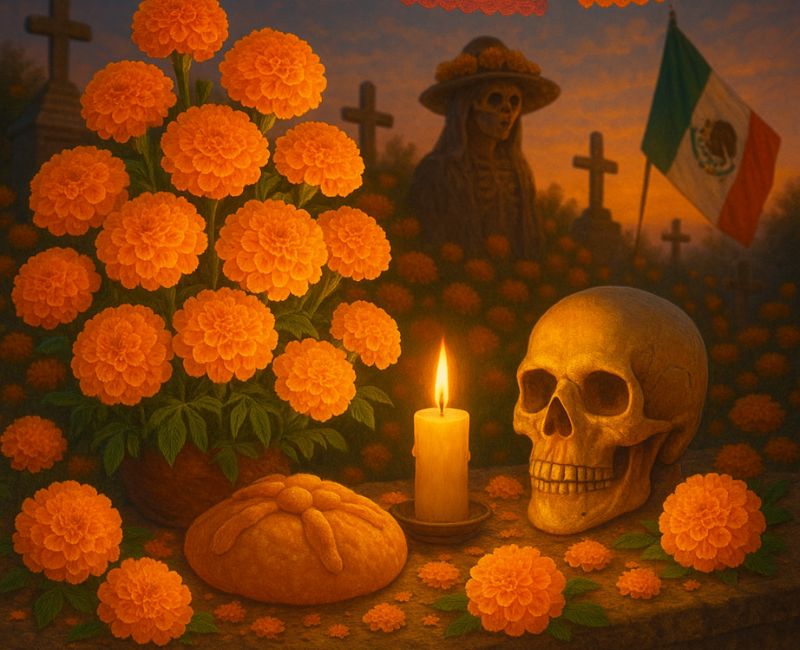
As a gardening expert who’s spent decades studying ornamental plants across cultures, I’ve uncovered the shocking truth about marigolds — they’re far more than bright garden flowers. In Mexican culture, marigolds hold deep spiritual significance, symbolizing the bridge between life and death. Every autumn, as the veil between worlds grows thin and families prepare to welcome their loved ones home, millions of marigolds burst into bloom across Mexico in radiant shades of orange and gold. This breathtaking display isn’t mere coincidence—it’s the result of centuries of sacred cultivation, ancient belief, and horticultural mastery that transformed a humble wildflower into the eternal symbol of Día de los Muertos.
The Ancient Roots: When Marigolds Were Called Cempasúchil
Long before Spanish conquistadors set foot in the Americas, the Aztecs had already recognized something extraordinary about the flower we now call marigold. They knew it as cempasúchil, derived from the Nahuatl word cempoalxochitl, which translates to “twenty flower” or “flower of four hundred petals”—a poetic exaggeration that speaks to the flower’s abundant, layered blooms.
The Aztecs weren’t just admiring these flowers for their beauty. As any experienced gardener knows, marigolds possess unique characteristics that set them apart from other blooms. Their robust nature, their ability to thrive in diverse conditions, and most notably, their intensely vibrant color made them stand out in pre-Columbian gardens. The Aztecs cultivated several varieties, but it was Tagetes erecta (African marigold, ironically named despite its Mexican origins) that became most sacred.
Read more – Eco Friendly Gardening Hacks: How to Grow More, Waste Less
In Aztec cosmology, these flowers were dedicated to Mictlantecuhtli and Mictecacihuatl, the lord and lady of the underworld. The flowers were believed to hold the warmth of the sun—a critical detail when you understand that the Aztecs saw the sun as the life force that animated all existence. When someone died, their spirit would need to journey through nine challenging levels of the underworld. The brilliant golden-orange petals of the cempasúchil were thought to capture sunlight and warmth, providing illumination and comfort to guide souls on this difficult passage.
The Horticultural Genius Behind the Tradition
From a gardener’s perspective, the choice of marigolds for this sacred purpose wasn’t arbitrary—it was brilliant botanical timing and practicality combined with spiritual symbolism. Let me explain why these flowers became irreplaceable in Day of the Dead celebrations.
First, consider the blooming cycle. Marigolds are photoperiod-sensitive plants, meaning their flowering is triggered by day length. In Mexico’s climate, Tagetes erecta naturally blooms from late October through November—precisely when Day of the Dead occurs (November 1-2). This wasn’t lost on ancient cultivators, who understood seasonal patterns intimately. They didn’t need to force blooms or use artificial growing techniques; nature provided exactly what was needed when it was needed.
Second, marigolds are remarkably hardy and prolific bloomers. A single well-established plant can produce dozens of flowers throughout the season. For families preparing ofrendas (altars) that might require hundreds or even thousands of petals to create the traditional paths from the street to the altar, this abundance was essential. I’ve grown marigolds in my own garden for years, and I’m consistently amazed by their generous production—you can harvest blooms regularly without diminishing the plant’s vigor.
Read more – Unlock Your Green Thumb: The Ultimate Guide to Plant and Gardening Success
Third, and perhaps most important from a sensory standpoint, marigolds possess an intense, distinctive fragrance. When you crush the petals between your fingers, you release a pungent, earthy scent that’s unmistakable. This wasn’t just pleasant—it was functional. In traditional belief, the spirits of the dead don’t have physical form but can follow scents. The powerful aroma of marigolds creates an olfactory pathway that guides souls from the cemetery to their family’s ofrenda. As someone who’s worked with essential oils and aromatic plants, I can attest that few flowers produce such a strong, carrying scent that remains potent even after the petals are scattered.
The Spanish Colonial Period: Syncretism and Survival
When Spanish colonizers arrived in the 16th century, they brought Catholicism and attempted to suppress indigenous religious practices. However, the Day of the Dead tradition—and the marigold’s central role—survived through a fascinating process of cultural syncretism.
The Catholic Church’s All Saints’ Day (November 1) and All Souls’ Day (November 2) conveniently aligned with the Aztec month of Miccailhuitontli, when the dead were traditionally honored. Rather than completely abandon their ancestral practices, indigenous communities cleverly merged the two traditions. The marigold remained, but now it adorned Catholic-influenced altars alongside crosses and images of saints.
From a horticultural standpoint, this period saw interesting developments in marigold cultivation. Spanish missions and monasteries, recognizing the flower’s importance to indigenous converts, often maintained marigold gardens. Monks documented growing techniques, and different regional varieties began to emerge through selective breeding. The smaller French marigold (Tagetes patula) also started appearing in Day of the Dead celebrations, offering families with less garden space an easier-to-grow alternative.
The Symbolism Deepens: Why Orange and Yellow Matter
As a gardener, I’ve always been fascinated by how color influences our perception and use of plants. The marigold’s signature colors—ranging from pale yellow to deep burnt orange—aren’t coincidental to their ceremonial use; they’re central to it.
In traditional Mexican culture, these warm hues represent multiple concepts simultaneously. Orange and yellow are the colors of the sun, yes, but they’re also the colors of maize—the sacred crop that sustained Mesoamerican civilizations. They represent the earth’s fertility, the harvest, abundance, and the cycle of life and death. When you scatter marigold petals from the cemetery gate to your home’s altar, you’re literally creating a golden pathway, a luminous road for spirits to follow.
Read more – How to Grow Strawberries from Seed: A Complete Guide
I’ve experimented with growing different marigold varieties over the years, and there’s a distinct difference in impact between pale lemon-yellow blooms and those deep, almost red-orange specimens. For Day of the Dead purposes, Mexican families traditionally prefer the deepest, most intensely colored flowers they can cultivate. These aren’t the delicate pastels you might choose for a spring wedding—these are bold, assertive colors that speak to the gravity and joy of the occasion.
Growing Cempasúchil: A Gardener’s Guide to Traditional Varieties
If you want to grow authentic Day of the Dead marigolds, here’s what decades of experience have taught me about cultivating these meaningful flowers.
The traditional variety is Tagetes erecta, specifically the cultivars that produce large, fully double blooms in deep orange. Seeds for these varieties can sometimes be found labeled as “African marigold” or “Aztec marigold.” In Mexico, heirloom varieties passed down through generations often produce the most vibrant, traditional blooms.
Start seeds indoors about six to eight weeks before your last frost date if you’re in a temperate climate. Marigolds aren’t particularly fussy about soil, but they perform best in well-draining earth with moderate fertility. Ironically, too much fertilizer can actually reduce blooming—these plants evolved in conditions that weren’t overly rich, and they’ve maintained that preference.
Space plants about 12-15 inches apart for the large varieties. They need full sun—at least six hours daily—to produce those intensely colored blooms. Water consistently but don’t overdo it; marigolds are surprisingly drought-tolerant once established. I’ve found that slight water stress actually intensifies their color and scent.
Deadhead regularly throughout the growing season to encourage continuous blooming. This is crucial if you’re planning to harvest blooms for Day of the Dead celebrations in late October. By removing spent flowers promptly, you redirect the plant’s energy into producing new buds rather than setting seed.
One technique I learned from traditional Mexican gardeners is to pinch back young plants when they’re about six inches tall. This encourages bushier growth and more flowering stems, ultimately giving you a much larger harvest of blooms when you need them most.
The Economics and Scale of Modern Marigold Production
Today, marigold cultivation for Day of the Dead has become a significant agricultural industry in Mexico. States like Puebla, Mexico State, and Michoacán dedicate thousands of acres to cempasúchil production. During peak harvest in October, wholesale flower markets in cities like Mexico City see millions of stems change hands daily.
This commercialization has brought both benefits and challenges. On one hand, it ensures that families across Mexico—even those without gardens—can access these essential flowers. The industry provides seasonal employment for thousands of workers and preserves agricultural knowledge about traditional varieties.
On the other hand, commercial pressure has led some growers to favor hybrid varieties that ship well and have longer vase life over the traditional, more fragrant heirloom types. As someone committed to preserving horticultural heritage, I find this concerning. The genetic diversity of traditional cempasúchil varieties represents centuries of selection and adaptation—losing these varieties would mean losing irreplaceable cultural and botanical heritage.
Beyond Mexico: The Global Spread of the Tradition
In recent decades, Day of the Dead celebrations have spread beyond Mexico’s borders, carried by diaspora communities throughout the United States and beyond. With this cultural diffusion, the marigold’s symbolic importance has also traveled.
I’ve consulted with community gardens in cities from Los Angeles to Chicago where families of Mexican heritage now grow marigolds specifically for Day of the Dead celebrations. These gardens serve multiple purposes—they maintain cultural connections, teach younger generations about traditions, and provide fresh flowers that might be prohibitively expensive to purchase, especially far from Mexico’s large-scale growing regions.
Interestingly, this global spread has introduced marigolds to gardeners who initially grew them only for their Day of the Dead significance but then discovered their many other benefits. Marigolds are excellent companion plants, helping deter certain garden pests. They’re also edible—the petals can be used as a saffron substitute or added to salads. This practical versatility has helped ensure their continued cultivation even as cultural practices evolve.
The Living Tradition: Contemporary Innovations
While the core tradition remains strong, I’ve observed fascinating contemporary innovations in how marigolds are used for Day of the Dead. Some artists now create elaborate marigold carpets and installations, using thousands of individual petals to create intricate designs that might depict portraits of the deceased or traditional motifs. These ephemeral artworks honor the dead while showcasing the flower’s versatility.
Urban gardeners without access to planting space have adapted by growing marigolds in containers. I’ve guided numerous clients through the process of cultivating beautiful, bloom-laden marigolds on apartment balconies and rooftops. The key is choosing appropriately sized containers (at least 10-12 inches deep), ensuring adequate drainage, and providing sufficient sunlight.
Some communities have also begun preserving traditional marigold varieties through seed-saving initiatives, recognizing that genetic diversity needs active protection. These projects document the specific characteristics of regional varieties—their particular shade of orange, their scent profile, their growth habits—before these distinctions are lost to commercial hybridization.
Conclusion: A Flower That Bridges Worlds
After decades of working with plants from every corner of the globe, I can confidently say that few flowers carry such profound cultural weight while remaining so accessible and easy to grow as the marigold. Its journey from Aztec ceremonial gardens to its current status as an irreplaceable element of Day of the Dead celebrations demonstrates how deeply horticulture and culture intertwine.
The marigold succeeded in its sacred role not just because of spiritual beliefs but because it possessed the practical characteristics necessary for the task: it bloomed at exactly the right time, produced abundantly, smelled powerfully, and displayed colors that resonated with deeply held cultural meanings. It survived colonial suppression because communities recognized its irreplaceable value and found ways to preserve it within new religious contexts.
For those of us who work with plants, there’s something moving about placing marigold blooms on an ofrenda, knowing that we’re participating in a tradition that stretches back five hundred years or more—a tradition maintained by countless gardeners who grew these same flowers, saved these same seeds, and passed along this same knowledge. When you grow cempasúchil in your garden, you’re not just cultivating a pretty annual; you’re maintaining a living connection to one of humanity’s most beautiful traditions for honoring the dead.
The marigold’s bright petals remind us that death isn’t the end of the story, that memory and love persist, and that something as simple as a flower—properly understood and honored—can help bridge the space between this world and the next. That’s a lesson worth remembering, whether you’re tending a garden in Oaxaca or a window box in Oregon.
References and Further Reading
- “Mexican Marigold Production and Cultural Significance” – University of California Agriculture and Natural Resources
- “Tagetes Species: Traditional Uses and Cultural Importance.
- “Day of the Dead: History and Traditions” – National Museum of Mexican Art