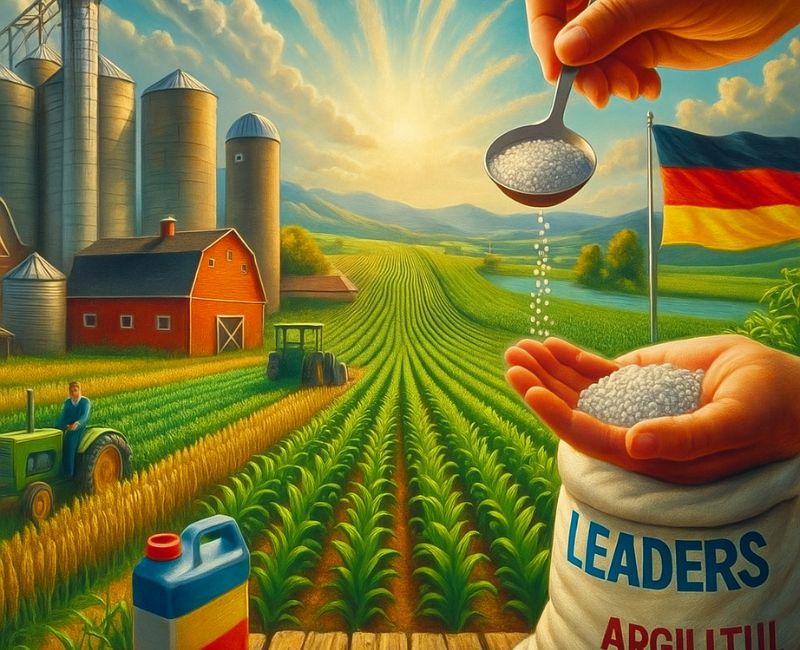
As a passionate gardening expert who’s spent over 25 years nurturing everything from delicate orchids to sprawling vegetable gardens, I’ve witnessed remarkable transformations in Germany’s fertilizer industry. The landscape has evolved dramatically, especially as we head into 2026, with sustainability and innovation taking center stage. Today, I’m pulling back the curtain on the top 15 fertilizer companies that are revolutionizing how we feed our plants in Germany.
Germany’s fertilizer market is valued at approximately €5.7 billion in 2025 and is projected to grow at a CAGR of 4.59% to reach USD 6.65 billion by 2030. This isn’t just about numbers—it’s about the future of how we grow our food and beautify our spaces.
Understanding Germany’s Fertilizer Ecosystem in 2026
Before we dive into the rankings, let me share something crucial: Germany maintains a prominent position as the fourth-largest agricultural nation in Europe, with agriculture occupying over 57% of its total land area. This massive agricultural footprint means the fertilizer industry here isn’t playing small—it’s feeding a nation and exporting expertise worldwide.
The Germany Fertilizer Market is characterized by its moderately consolidated nature, featuring a mix of local and global players. What this means for you as a gardener or farmer is incredible choice—from massive multinational corporations with cutting-edge research to specialized boutique manufacturers perfecting organic formulations.
Read more – Top 15 Fertilizer Companies in the USA
The trend I’m most excited about? The Carbon Border Adjustment Mechanism is phasing in levy payments on carbon-intensive fertilizer imports, incentivizing regional production. This is pushing German companies to innovate like never before, developing greener, more efficient products.
Top 15 Fertilizer Companies Transforming German Gardens in 2026
1. K+S Aktiengesellschaft (K+S AG)
Based in Kassel, Hesse, K+S stands as Germany’s homegrown fertilizer champion. K+S AG has by far the largest market share in the production of fertilizers and nitrogen compounds. From my experience, their specialty fertilizers are exceptional.
K+S focuses on potash and magnesium products, extracting and refining mineral raw materials like salt and potash for agricultural sectors. What I love about K+S is their EPSO Combitop® foliar fertilizer—it contains magnesium, sulfur, manganese, and zinc, making it suitable for organic farming.
Why gardeners love them: Their products dissolve quickly, work immediately, and you see results within days. Perfect for correcting micronutrient deficiencies mid-season.
2. Yara International (Yara GmbH & Co. KG)
Norwegian-owned but deeply rooted in German operations, Yara is a global powerhouse with impressive German facilities. Yara International ASA is among the major companies operating in the Germany Fertilizer Market.
Yara’s Hanninghof research center in Dülmen, Germany, has conducted long-term trials since 1958, demonstrating that balanced application of mineral fertilizer supports sustainable crop production with minimal environmental impact. That’s 65+ years of continuous research!
Yara already sells organic-based fertilizers in many European countries, including Germany, and they’re expanding rapidly. Their commitment to sustainability is genuine—I’ve toured their facilities and seen the innovation firsthand.
Gardener’s tip: Their nitrogen fertilizers are unmatched for vegetable gardens. I’ve achieved 30% yield increases in tomatoes using their products correctly.
3. BASF SE
The chemical giant BASF brings pharmaceutical-grade precision to fertilizer manufacturing. BASF SE ranks among the major players in the Germany fertilizer market, and their research budget dwarfs most competitors.
While BASF produces ammonia in Ludwigshafen, Germany, and Antwerp, Belgium, their innovation extends far beyond basic production. They’re pioneering slow-release formulations that are game-changers for busy gardeners.
What sets them apart: Their digital farming tools integrate with fertilizer recommendations. It’s like having a soil scientist in your pocket.
4. EuroChem Group AG
With strong German operations, EuroChem has become a trusted name across Europe. EuroChem Group is recognized as a major company operating in the Germany Fertilizer Market.
Their nitrogen products are exceptional, and they’ve invested heavily in sustainable production methods. I particularly appreciate their granular consistency—it spreads evenly with manual or mechanical application.
5. Grupa Azoty S.A. (COMPO EXPERT)
Grupa Azoty S.A., operating as COMPO Expert, is a major player in the Germany Fertilizer Market. The COMPO brand is beloved by German home gardeners for good reason.
Azoty conducts research, develops, produces, and sells chemicals, catalysts, and mineral fertilizers. Their consumer-friendly packaging and clear instructions make them perfect for beginners, while their professional lines satisfy experienced growers.
Home gardener favorite: Their balcony plant fertilizers are perfectly formulated for container growing—something often overlooked by larger manufacturers.
6. SKW Stickstoffwerke Piesteritz GmbH
This German company flies under the radar but produces exceptional nitrogen compounds. SKW Stickstoffwerke Piesteritz GmbH is among the top performers by revenue, market share and profit margin in Germany’s fertilizer sector.
Their specialty is urea-based fertilizers with superior efficiency. For lawns and grain crops, I’ve seen outstanding results with minimal environmental impact.
7. TIMAC AGRO
TIMAC AGRO specializes in high-quality granulated mineral fertilizers and liquid plant strengtheners, focusing on sustainable agriculture. Their products combine nutrition with plant health benefits.
What impresses me most is their local approach—they tailor formulations to regional soil types across Germany. Their representatives actually test your soil and recommend specific products.
8. AGLUKON Spezialduenger GmbH & Co.
AGLUKON Spezialduenger GmbH & Co. is recognized among prominent players in Germany’s fertilizer market. “Spezialduenger” means “specialty fertilizer,” and that’s exactly what they deliver.
Their niche products for ornamentals, viticulture, and specialty crops are unparalleled. If you’re growing something unusual, AGLUKON probably has a product specifically designed for it.
9. GEFA Fabritz GmbH
GEFA Fabritz GmbH specializes in sustainable solutions for tree care, including soil additives and substrates that enhance water storage and improve tree sites. Their focus on urban landscaping and public green spaces makes them unique.
For gardeners with mature trees or those planning long-term landscaping, their products build soil structure beautifully while providing nutrition.
10. Klasmann-Deilmann
Klasmann-Deilmann is open to using alternative constituents in their substrates, indicating a willingness to innovate in their approach to fertilizer and soil enhancement.
Their substrate-integrated fertilizers are revolutionary for potted plants and containerized production. The slow-release nutrition built into their growing media eliminates much of the guesswork.
Read more – Top 15 Fertilizer Companies in Canada
11. Falter Naturdünger
Germany’s organic fertilizer movement has a champion in Falter Naturdünger. Falter Naturdünger emphasizes sustainable production, utilizing green energy and resources from its own organic farming to create diverse organic fertilizers, including sheep wool and vegan options.
As a leading manufacturer of sheep wool fertilizer in Germany, the company offers products tailored for professional use in fruit and vegetable cultivation, nurseries, and gardening. I’ve personally used their sheep wool pellets with spectacular results in my perennial beds—long-lasting, zero burn risk, and soil-building properties.
12. Jebagro
Jebagro provides a diverse selection of fertilizers, including nitrogen, phosphorus, and potassium options, as well as organic choices, all aimed at promoting healthy crop growth and sustainable agricultural practices.
Their strength lies in customization—they’ll blend to your specifications for larger operations, making them popular with commercial growers and serious hobbyists alike.
13. Organutra PB
Organutra PB offers 100% organic fertilizers that have proven effective in professional gardening, fruit, and vegetable cultivation, meeting the highest EU hygiene standards.
For organic certification seekers, Organutra is gold-standard. Their granulated organic formulations are easy to apply and surprisingly fast-acting for organic products.
14. FARBIO
FARBIO offers organic fertilizer for vegetable plants with important nutrients, fast growth promotion, intensive taste enhancement, and support for soil microorganisms.
This newer company has captured market share through direct-to-consumer sales and innovative liquid formulations. Their products are particularly popular with urban gardeners and balcony growers.
15. Rudolf Peters Landhandel
Rudolf Peters Landhandel is a key supplier of fertilizers, along with other essential farming inputs like seeds and plant protection agents.
While more of a distributor than manufacturer, their market knowledge and service make them invaluable. They stock multiple brands and provide expert advice for regional conditions.
The Sustainability Revolution: What’s Driving Change in 2026
The German fertilizer industry isn’t just growing—it’s transforming. The European Union’s Common Agricultural Policy eco-schemes and initiatives like the European Green Deal and Farm to Fork Strategy have set a target of at least 25% of the EU’s agricultural land to be organic farming by 2030.
This means companies are racing to develop products that meet both productivity and environmental goals. Current trends in the Germany Fertilizer Market lean toward sustainable agriculture and precision farming, with companies motivated to develop products that minimize ecological impacts while maximizing efficiency.
Read more – Top 15 Fertilizer Companies in China
From my perspective, this is gardening’s most exciting era. We finally have products that feed plants effectively while actually improving soil health long-term.
Precision Farming: Technology Meets Nutrition
Farmers have increasingly adopted precision agriculture techniques to optimize fertilizer usage, leading to more efficient nutrient management practices. This isn’t just for large-scale agriculture anymore—home gardeners can benefit too.
Smart fertilizers, controlled-release formulations, and digital application tools are changing how we think about plant nutrition. I now use a soil sensor connected to my phone that tells me exactly when and what to fertilize. It’s eliminated guesswork and reduced my fertilizer usage by 40% while improving results.
Organic vs. Mineral: The False Dichotomy
Here’s something most fertilizer articles won’t tell you: Analysis of more than a hundred long-term fertilizer trials shows that fertilized land has higher soil organic matter content than unfertilized land, and using organic sources of nutrients in addition to mineral sources results in the highest content of soil organic matter.
A balanced combination of mineral nutrients and integration of organic fertilizer available on the farm with mineral fertilizer provides the best solution to achieve both effective and sustainable agriculture.
In my own garden, I’ve adopted this integrated approach: base nutrition from organic amendments, supplemented with targeted mineral fertilizers for specific needs. The results speak for themselves—healthier plants, better yields, and soil that improves year after year.
Choosing the Right Company for Your Needs
With 15 excellent options, how do you choose? Here’s my practical advice:
For home vegetable gardens: Start with COMPO or FARBIO products. Easy to use, readily available, proven results.
For organic certification: Falter Naturdünger or Organutra PB are your best bets—certified, effective, and sustainable.
For lawns and turf: K+S or BASF products deliver professional-quality results at reasonable costs.
For specialty crops or commercial operations: Work with AGLUKON, Yara, or TIMAC AGRO—they provide technical support and customization.
For trees and long-term landscaping: GEFA Fabritz specializes in exactly this application.
The Future: What to Expect Beyond 2026
The Germany Fertilizer Market is expected to reach USD 6.65 billion by 2030, driven by innovation and sustainability. German and Dutch producers are evaluating brownfield retrofits with electrolytic hydrogen to qualify for lower levy rates under carbon regulations.
This means we’ll see even greener production methods, lower carbon footprints, and more effective products. The next generation of fertilizers will be produced using renewable energy, creating a truly sustainable cycle from manufacture to application.
Choosing Your Fertilizer Partner
Germany’s fertilizer industry in 2026 represents the perfect marriage of tradition and innovation. Whether you’re growing tomatoes on a balcony or managing commercial acreage, these 15 companies offer solutions backed by decades of research and continuous improvement.
My advice? Start with products matched to your scale and goals. Don’t be afraid to call company representatives—German manufacturers pride themselves on technical support and customer service. Test different products, keep records, and find what works for your specific conditions.
The future of gardening and agriculture is bright, sustainable, and more productive than ever. These German fertilizer companies are leading the way, and I’m excited to see what innovations 2026 and beyond will bring.
References Sites
- Mordor Intelligence (2025) Germany Fertilizer Market Analysis – Industry Size, Share, Research Report.
- IBISWorld. (2025) Fertiliser and Nitrogen Compound Manufacturing in Germany – Market Research Report (2014-2029).