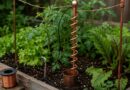
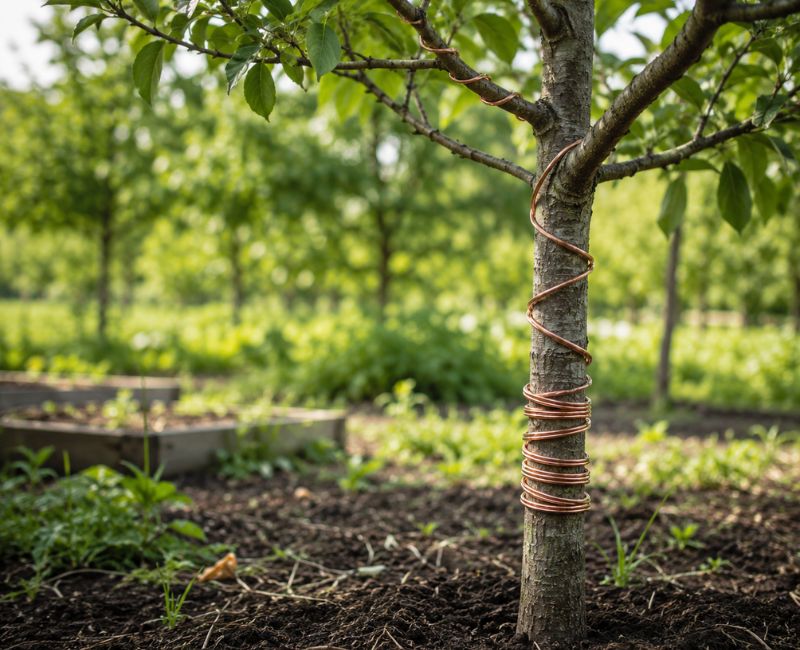
Of all the electroculture claims circulating on social media in 2026, the copper wire in trees image is one of the most striking and most shared. A coil of copper wire wrapped around the base of a tree trunk, or wound in a spiral up a wooden stake in a vegetable bed, presented as evidence of a transformational gardening technique.
The claim: copper wire collects atmospheric electricity, channels electromagnetic energy into the plant’s root system, and stimulates growth beyond what any conventional input could achieve.
It’s a compelling visual. But at Plantugaoo.com, we think the most respectful thing we can do for our community is answer the question directly: does it actually work?
Let’s look at exactly what copper wire can and cannot do for plant growth separating the electroculture mythology from the real plant science.
The Copper Wire in Trees Claim: What Exactly Is Being Said?
The viral copper wire practice comes in several variations:
Version 1 Copper wire spiral stake in soil (vegetable garden) A copper wire wound spirally around a bamboo or wooden stake, inserted into garden soil. Claims: acts as antenna for atmospheric electricity; improves soil charge; stimulates root development.
Version 2 Copper wire wrapped around tree trunk Bare copper wire wound several times around the lower trunk of a fruit or ornamental tree. Claims: improves sap flow, increases fruit yield, stimulates growth hormones.
Version 3 Copper nails driven into tree trunk Copper nails hammered into a tree trunk. Claims (varying): kills unwanted trees (real more on this below), or in electroculture framing, stimulates healthy trees. A significant factual confusion exists in this space.
Version 4 Copper wire in water used for plant watering Soaking copper wire in water overnight and using the resulting water to irrigate plants. Claims: delivers trace copper minerals to plants through irrigation.
These four variants are often conflated in social media content. They have different mechanisms, different evidence bases, and very different outcomes. Let’s examine each.
Version 1: Copper Spiral Stakes in Soil What the Evidence Shows
This is the core electroculture claim, covered in detail in our full electroculture explainer and DIY setup guide.
The electrical claim: That copper wire acts as an antenna for atmospheric electricity that benefits plant growth.
The evidence: No peer-reviewed research supports this specific claim. The atmospheric electricity at ground level (the fair-weather electric field of approximately 100–150 V/m near ground) interacts with a copper stake in a way that has not been demonstrated to produce measurable plant growth effects in published, controlled studies.
The copper mineral claim: That the stake releases copper micronutrients into the surrounding soil.
The evidence here is more nuanced:
- Copper is a genuine plant micronutrient essential for photosynthesis, enzyme function, and disease resistance
- Bare copper wire does slowly oxidise and release trace copper ions into surrounding soil
- In copper-deficient soils, this trace addition could theoretically be beneficial
- In normal garden soil, copper deficiency is rare and excess copper is actively harmful
Verdict on Version 1: The electrical antenna claim is unsupported. The trace mineral release is real but unlikely to be beneficial in adequately-nourished garden soil, and potentially harmful with prolonged heavy copper use.
Version 2: Copper Wire Wrapped Around Tree Trunks A More Complex Picture
This variant is where the evidence becomes genuinely interesting though not in the way electroculture advocates suggest.
What copper wire actually does to trees:
Copper wire wrapped tightly around a growing tree trunk does something very specific and well-documented: it restricts vascular flow (girdling). As the tree grows, the wire cuts into the bark, interrupting the phloem layer that carries sugars from leaves to roots.
In fruit trees, deliberate girdling is a legitimate and well-studied horticultural technique:
- A shallow cut or constrictive band around a branch or trunk temporarily interrupts downward carbohydrate flow
- This causes carbohydrate accumulation above the constriction
- This accumulation can stimulate flowering and fruit set in certain species
Research on deliberate girdling in apple, citrus, and grape production is well-established. The effect is real.
The electroculture interpretation vs the real mechanism:
When electroculture practitioners wrap copper wire around tree trunks and observe more vigorous flowering or fruit set, they attribute it to electromagnetic energy. The actual mechanism if the effect is real is almost certainly the girdling effect causing carbohydrate accumulation, not electrical conductivity.
Important caveats:
- Permanent tight girdling damages and can kill trees
- The effect is most studied in controlled orchard conditions, not home garden wrappings
- Copper wire applied and left indefinitely will girdle increasingly as the tree grows potentially causing significant damage over several years
What responsible practitioners do: If using wire around tree branches for fruit stimulation, use a technique known to work (single-branch girdling) with a material that will be removed after 2–4 weeks not permanent copper wire left in place indefinitely.
Version 3: Copper Nails in Tree Trunks The Dangerous Confusion
This is where responsible information becomes critically important.
The real copper nail claim: Driving copper nails into a tree trunk does progressively kill the tree. This is a documented, if slow and unreliable, tree removal method sometimes used on problem trees. The copper ions released into the vascular tissue are toxic at concentration.
The electroculture confusion: Some social media content presents copper nails as a growth stimulant rather than a tree killer fundamentally misunderstanding or misrepresenting the actual effect.
Our clear guidance: Do not drive copper nails into trees you want to keep healthy. This is not a beneficial electroculture practice it is a tree-damaging one. The confusion between “copper nails kill trees” (true, if slowly) and “copper nails help trees” (false) represents one of the more dangerous misinformation strands in the electroculture community.
Version 4: Copper Water The Most Plausible Variant
Soaking copper wire in water and using the resulting solution to water plants is the electroculture variant with the most defensible mechanism though it still requires significant qualification.
The real effect: Copper does slowly dissolve from bare copper wire into water, creating a dilute copper solution. Copper has genuine antimicrobial and antifungal properties it’s used in commercial fungicide preparations (copper sulphate, Bordeaux mixture) and has been used in agriculture for centuries.
When copper water could be beneficial:
- As a dilute preventative against fungal diseases (downy mildew, late blight) similar in principle to Bordeaux mixture but at much lower concentration
- In genuinely copper-deficient soils
- As a very occasional treatment, not regular irrigation
The risks of regular copper water use:
- Regular application of copper-enriched water raises soil copper levels over time
- Elevated soil copper is toxic to earthworms, beneficial fungi (mycorrhizal networks), and many soil bacteria
- The healthy soil microbiome that good gardeners build is actively damaged by copper accumulation
Our guidance: If you want to use copper as a fungal preventative, use a properly formulated, properly dosed copper-based organic fungicide (copper hydroxide or copper oxychloride) rather than copper-soaked water. The former gives you controlled dosing; the latter gives you no reliable control over concentration.
What Copper Actually Does for Plants: The Science
Separating myth from reality, here’s what we know about copper’s role in plant health:
| Role | Evidence Level | Context |
|---|---|---|
| Essential micronutrient for plant enzymes | Very strong | Required in trace amounts; deficiency causes growth problems |
| Component of photosynthesis | Very strong | Copper proteins involved in electron transport chain |
| Antifungal / antimicrobial agent | Strong | Basis of Bordeaux mixture and copper fungicides |
| Soil copper toxicity to microbiome | Very strong | Well-documented at elevated concentrations |
| Electrical conductor for atmospheric energy | No evidence | Electroculture-specific claim; unsupported |
| Growth stimulation via electromagnetic field | No evidence | No mechanism or study supports this |
| Tree girdling effects on fruit set | Moderate | Real effect but not from electrical conductivity |
| Copper nail damage to tree vascular tissue | Strong | Well-documented; used in tree removal |
The Honest Bottom Line on Copper Wire and Plants
Copper plays real roles in plant biology. These roles are micronutritional, enzymatic, and in specific applications, antimicrobial. They have nothing to do with atmospheric electricity, electromagnetic fields, or the antenna concept central to modern electroculture.
The visible effects some gardeners observe from copper wire installations are more plausibly explained by:
- Trace copper mineral effects in copper-deficient soils (rare)
- Girdling effects where wire contacts bark (real but not what’s claimed)
- Increased gardener attention and care
- Normal plant variation
The copper wire tradition in gardening is not entirely without basis it’s just that the actual mechanisms are mundane plant science rather than the extraordinary electromagnetic narrative being told about them on TikTok.
Understanding the real science doesn’t make gardening less interesting. In our experience at Plantugaoo.com, it makes it more so because the truth about how plants actually work is genuinely fascinating without any embellishment.
Continue the Electroculture series: DIY Electroculture Setup: How to Build Copper Spiral Stakes | Electroculture Gardening: TikTok Trend or Science? | Why Scientists Say Electroculture Has No Real Evidence | Electroculture vs Organic Fertilizers: Reality Check 2026
Conclusion
The copper wire and plants story is actually one of the more interesting corners of electroculture because copper does have genuine roles in plant biology, and some of the effects people observe from copper applications are real. They’re just not the effects being claimed.
Understanding what copper actually does as a micronutrient, as an antifungal agent, as a potential girdling tool gives you genuinely useful information for your garden. Understanding what it doesn’t do collect atmospheric electricity and supercharge your yields saves you from misplaced effort and potentially from real plant damage.
That’s the kind of clear, honest, community-first gardening information that Plantugaoo.com is here to provide.
Explore more: Electroculture Gardening Compared: Before/After Plant Growth Experiments | Why Scientists Say Electroculture Has No Real Evidence | Electroculture vs Organic Fertilizers: Cost, Claims & Reality Check 2026.