
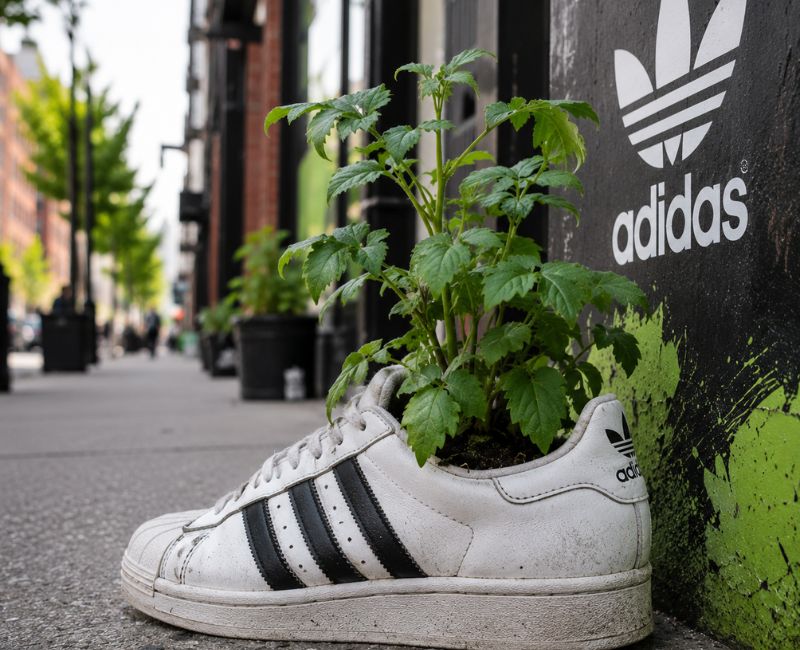
When a movement born from midnight planting sessions and thrown seed bombs gets adopted by billion-dollar corporations, something interesting happens. The tactics stay largely the same. The motivations become considerably more complicated.
Corporate guerrilla gardening brands using guerrilla gardening aesthetics, techniques, or actual planting campaigns as marketing activations has grown from a niche PR strategy into an established tactic in the sustainability marketing playbook. Some campaigns are genuinely impactful. Others are greenwashing with a trowel.
This article examines the most significant corporate guerrilla gardening campaigns, what made them work (or not), and what the broader movement thinks about the corporate adoption of its identity.
What Is the Difference Between Guerrilla Gardening and Guerrilla Marketing?
Before examining corporate campaigns, it’s worth clarifying the terminology:
Guerrilla gardening (as covered in our full explainer) is grassroots, activist planting on land without permission motivated by environmental and community goals.
Guerrilla marketing is an unconventional, low-cost marketing strategy that uses surprising or unexpected tactics to promote a brand the “guerrilla” referring to small-scale, agile tactics rather than anything garden-related.
Corporate guerrilla gardening is the intersection: brands using actual planting, seed distribution, or greening activities as marketing stunts or sustainability campaigns. It borrows both the aesthetics of the original movement and some of its tactics, while operating with budgets and PR teams that would be unrecognisable to Richard Reynolds or Liz Christy.
Case Study 1: Adidas Stan Smith “Mylo” Launch and Green Activations
Adidas has been one of the most consistent corporate adopters of environmental guerrilla aesthetics. Several campaigns are worth examining:
The Stan Smith Mylo Campaign (2021–2022)
As part of the launch of the Stan Smith Mylo a shoe made from mycelium (mushroom root) leather Adidas partnered with guerrilla gardening-inspired pop-up installations in Berlin, London, and Amsterdam. The activations involved:
- Overnight seed bomb drops in city-centre locations branded with QR codes linking to the product campaign
- Wildflower seed packets included with orders for a limited period
- “Green stan” photo opportunity installations minimal white structures placed in parks and public spaces, surrounded by planted wildflowers
What made it work: The product story was genuinely connected to the campaign. Mycelium leather is a real sustainability innovation, and the wildflower-based campaign visual matched the bio-material narrative. The seed bomb drops generated significant earned media coverage.
What critics said: The manufacturing footprint of a global shoe brand still vastly outweighs the impact of a seed bomb campaign. Environmental commentators noted the disproportionate PR value relative to actual environmental benefit.
Adidas Parley for the Oceans Beach Cleaning + Planting Events
Adidas’ long-running Parley partnership has included coastal guerrilla greening events teams of participants planting sea grass, coastal wildflowers, and native species in beach and coastal areas, documented on social media.
Impact: More substantive than a seed bomb drop. Sea grass planting has measurable coastal biodiversity and carbon sequestration benefits. Parley events have involved thousands of participants across dozens of countries.
Marketing vs impact balance: Better than most. The Parley partnership predates the “eco guerrilla marketing” trend and involves genuine scientific partnerships with marine conservation organisations.
Case Study 2: Patagonia The Original Anti-Corporate Environmental Activist Brand
Patagonia is the case study that all corporate environmental campaigns are measured against often unfavourably.
Patagonia’s approach to guerrilla greening has been characteristically contrarian:
- “Don’t Buy This Jacket” campaign: Rather than a planting activation, Patagonia ran a full-page ad on Black Friday urging consumers not to buy its products unless they genuinely needed them a genuinely unusual stance that aligned with its environmental values.
- Grassroots grant funding: Patagonia’s Environmental Grants programme has funded actual guerrilla gardening and urban greening groups rather than running branded planting stunts. The company acts as a funder of the movement rather than a participant in it.
- Worn Wear programme: Repair and reuse infrastructure rather than environmental spectacle.
Why this matters for guerrilla gardening: Patagonia’s model funding existing movements rather than co-opting their aesthetics is widely cited by environmental activists as the more credible corporate approach.
Case Study 3: Heineken “Dropped” and Urban Greening Bars
Heineken’s various guerrilla marketing campaigns have occasionally crossed into environmental territory, most notably through:
- Urban rooftop bar conversions that incorporated community growing spaces as part of brand activation events in Amsterdam and London
- Seed packet giveaways at festivals branded with the Heineken logo
Assessment: Lower environmental substance than the Adidas or Patagonia examples. The primary purpose is clearly brand entertainment with a green aesthetic overlay. The rooftop growing spaces, however, provided some genuine community benefit post-campaign.
Case Study 4: IKEA Urban Growing Campaigns
IKEA has run several campaigns directly engaging with urban food growing, including:
- “Growroom” open-source garden structures: IKEA released open-source, downloadable designs for a spherical wooden growing structure intended for urban spaces, freely available for anyone to build. Thousands were built globally.
- Balcony growing guides distributed in stores across European markets, including seed starter kits
- Pop-up edible gardens in urban locations promoting the launch of indoor growing product lines
Assessment: The Growroom in particular stands out as a genuinely useful, openly shared contribution. Giving away usable design files rather than running a controlled brand stunt reflects better on the environmental intent and generates significant earned media.
Case Study 5: The Seed Bomb Marketing Trend
Seed bomb kits have become a mainstream corporate giveaway item. Events, product launches, and sustainability reports are now routinely accompanied by branded seed bombs often with company logos embedded in the clay or printed on the packaging.
The spectrum of quality:
- Low end: Generic, often non-native seed mixes in cheap clay, given as afterthought gifts at conferences. Rarely germinate successfully.
- High end: Native wildflower species, quality clay, proper drying, specific planting instructions, and follow-up engagement. Genuinely useful.
The problem: The ubiquity of branded seed bombs has diluted the guerrilla gardening association. For many recipients, they’re a novelty item rather than an activation tool. Germination rates from conference-circuit seed bombs are consistently low partly because non-native or unsuitable species are used, partly because recipients don’t know what to do with them.
Comparing Corporate Guerrilla Gardening Campaigns
| Brand | Campaign Type | Environmental Substance | PR Value | Community Benefit | Overall Rating |
|---|---|---|---|---|---|
| Adidas (Mylo) | Seed bomb drops + installations | Low–Moderate | Very High | Low | Mixed |
| Adidas (Parley) | Coastal planting events | High | High | Moderate–High | Good |
| Patagonia | Movement funding, no-buy campaigns | Very High | High | High | Excellent |
| Heineken | Rooftop activations, seed giveaways | Low | Moderate | Low–Moderate | Weak |
| IKEA (Growroom) | Open-source design, growing guides | Moderate–High | High | High | Good |
| Generic brands | Conference seed bomb giveaways | Very Low | Low | Very Low | Poor |
What the Guerrilla Gardening Community Thinks
Opinions within the guerrilla gardening community on corporate adoption range from pragmatic acceptance to outright hostility.
The pragmatic view: “Any attention that brings more people to urban greening is net positive. If Adidas makes seed bombs mainstream, more people will use them regardless of who manufactures them.”
The critical view: “Corporate guerrilla gardening extracts the rebellious aesthetic of the movement the secrecy, the anti-establishment energy and packages it as marketing material without engaging with the actual cause. It’s not guerrilla anything. It’s a PR stunt with soil.”
The community consensus: Most experienced guerrilla gardeners distinguish between brands that fund and support existing community projects (positive) and brands that use guerrilla aesthetics as campaign backdrops without genuine environmental commitment (negative, or at best neutral).
The test most activists apply: Would the brand’s environmental impact be positive if you removed the marketing campaign entirely? For Patagonia, yes. For a beer company distributing branded seed bombs at a music festival, no.
What Makes a Corporate Guerrilla Gardening Campaign Credible?
For brands, marketers, and sustainability leads considering this approach:
High credibility signals:
- Native species, locally appropriate seed mixes
- Partnerships with existing community gardening organisations
- Long-term stewardship of planted sites, not just one-day events
- Transparent measurement of actual environmental outcomes (plant survival, biodiversity increase)
- Funding guerrilla gardening groups rather than running branded stunts
Low credibility signals:
- Branded seed bombs with generic non-native mixes
- One-day planting events with no follow-up
- Campaign visuals that use guerrilla aesthetic without actual planting
- Environmental messaging disproportionate to campaign footprint
Related reading: Guerrilla Gardening Explained: The Real Movement Behind the Marketing | 10 Creative Guerrilla Gardening Innovations | Is Guerrilla Gardening Legal? Global Laws & Risks
Conclusion
Corporate guerrilla gardening is neither inherently good nor bad — it exists on a spectrum from genuine environmental contribution to pure aesthetic borrowing. The Adidas Parley coastal planting events and IKEA’s open-source Growroom design sit at one end of that spectrum. Conference-circuit branded seed bombs sit at the other.
For gardeners and environmental advocates, the value is in understanding the distinction and in supporting brands that behave consistently with their green messaging beyond the campaign period.
For brands: the guerrilla gardening movement has 50 years of credibility and an instinct for authenticity. Borrowing its toolkit requires meeting its standards, not just its aesthetics.
Continue the Guerrilla Gardening series: Late-Night Sneak Outs: How Guerrilla Gardeners Organise Secret Plantings | Guerrilla Gardening for Urban Revitalization: Before/After City Transformations.