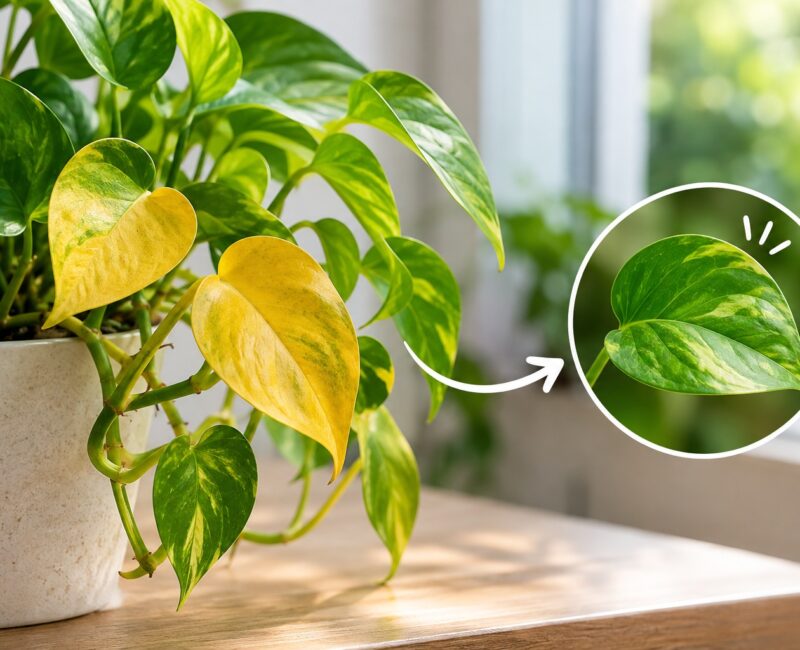
Money plant yellow leaves are one of the most common houseplant worries in Indian homes, and in most cases the cause is something you can fix in an afternoon. The tricky part is that several different problems look alike: too much water, too little light, a cold draught and a handful of others all turn leaves yellow. This guide shows you how to tell them apart and what to do about each one, with extra notes for the cooler months now arriving across India.
Quick Answer: Why Is My Money Plant Turning Yellow?
Yellow leaves on a money plant most often point to too much water around the roots, especially when cool weather slows evaporation. Other frequent causes are low light, cold draughts, harsh sun, pests, crowded or oversized pots and poor feeding. Check the soil and roots first: wet soil with soft, dark roots means overwatering, while one old lower leaf yellowing is normal ageing.
In This Guide
- Which money plant do you have?
- Is yellowing ever normal?
- 60-second diagnosis table
- Cause 1: Overwatering and poor drainage
- Cause 2: Cold, draughts and temperature swings
- Cause 3: Wrong light (too little or too much)
- Cause 4: Underwatering and dry air
- Cause 5: Pests
- Cause 6: Crowded roots, oversized pots and moving stress
- Cause 7: Feeding problems
- How to check the roots and rescue your plant
- Money plant care in an Indian winter
- Safety: pets and children
- Frequently asked questions
- Sources
Which Money Plant Do You Have?
In most Indian homes, “money plant” means Epipremnum aureum, also sold as golden pothos, devil’s ivy or under its older name Scindapsus aureus. The Royal Horticultural Society (RHS) even lists the white-and-green ‘Marble Queen’ pothos under the common name money plant on its epipremnum plant page.
The name is used loosely, though. The Chinese money plant (Pilea peperomioides), the jade plant (Crassula) and the money tree (Pachira aquatica) are all sold as “money” plants, and their needs differ. A jade plant is a succulent and wants far less water than a pothos. This article covers the climbing, heart-shaped-leaf Epipremnum. If yours is another plant, our guides to types of money plants and how to care for them and different types of money plants will help you identify it first.
Is Yellowing Ever Normal?
Yes. The RHS notes that it is normal for the odd lower leaf on a mature houseplant to yellow and fall. If one or two of the oldest leaves near the base turn yellow slowly while the vine keeps producing healthy new growth, you are watching ordinary ageing, not disease. Snip the leaf off once it has yellowed completely and carry on.
Start investigating when yellowing is widespread, spreads quickly, or arrives with soft stems, wilting, an unpleasant smell from the soil, or dark patches at the base of the vine.
60-Second Diagnosis Table
Use this as a starting point. Several causes can overlap, so confirm with the roots and soil before changing everything at once.
| What you see | Most likely cause | First thing to do |
|---|---|---|
| Several leaves yellow, soil still wet days after watering, soft stem near the base | Overwatering or root rot | Stop watering and check the roots |
| Yellowing after a cold night, or plant near a window gap or AC vent | Cold or draught | Move it to a steady, sheltered spot |
| Pale leaves, slow growth, faded variegation | Too little light | Move to bright, indirect light |
| Bleached or scorched yellow patches on sun-facing leaves | Too much direct sun | Filter or move away from the glass |
| Yellow plus brown, crispy edges and very dry soil | Underwatering or dry air | Water thoroughly and let it drain |
| Speckling, sticky residue or insects under the leaves | Pests | Isolate the plant and inspect closely |
| Roots circling the pot, or recently moved into a much bigger pot | Crowding or oversized pot | Repot to a suitable size |
| General paling after many months without feeding | Feeding problem | Rule out other causes, then feed to the label |
Cause 1: Overwatering and Poor Drainage
This is the usual suspect. Roots need air as well as water. Cornell Cooperative Extension explains that when soil stays too wet or drains badly, roots lose oxygen, suffocate and die, and then water and nutrients can no longer reach the foliage, which yellows. The RHS says the same of epipremnum: compost kept too wet, or a pot left standing in water, can make the roots rot, and overwatering in winter is a particular risk.
How to recognise it: several leaves yellowing together, soil that stays damp for days, a soft or mushy stem base, and roots that look brown, soft and rotted when you slip the plant out of its pot. The RHS describes dark, soft or brittle roots as a sign of poor root health.
How to fix it:
- Stop watering and let the top layer of soil dry. The RHS advises watering only when the compost is approaching dryness, checked with a finger first.
- Make sure the pot has drainage holes and empty any saucer after watering. If you like a decorative pot without holes, keep the plant in its plain nursery pot and lift it out to water.
- If the soil is heavy or compacted, repot into a fresh, free-draining mix (see the rescue steps below).
Cause 2: Cold, Draughts and Temperature Swings
Money plants come from warm, frost-free climates. The RHS recommends keeping epipremnum between roughly 18 and 30°C (65 to 86°F) and away from cold draughts and direct heat sources. Iowa State University Extension lists extreme temperatures as a leading cause of leaf yellowing and drop, including blasts of cold or warm air from doors, windows and air ducts.
In Indian homes that often means a plant on a windowsill next to a gap that lets in cold night air, one parked directly in front of an air conditioner, or one sitting beside a heater in a north Indian winter.
The fix: move the plant somewhere with steadier temperatures, away from vents and door gaps, and avoid sudden changes. Yellowing caused by cold often appears within days of a chilly spell, so think back over the last week.
Cause 3: Wrong Light (Too Little or Too Much)
The RHS describes epipremnum as happiest in bright, indirect light, such as an east or west window, or a south window with a sheer curtain, and advises avoiding both full sun and deep shade. Direct summer sun can scorch leaves, while too little light leads to poor growth and loss of variegation.
Too little light shows up as pale, washed-out leaves, leggy vines with long gaps between leaves, and variegated types turning plain green. Too much sun shows up as bleached or scorched patches on the leaves facing the glass.
The fix: move the plant towards a brighter spot or back from the glass, and do it gradually. Iowa State’s extension advice is to change light levels in steps, because a sudden jump in intensity can itself trigger leaf drop. The RHS also notes that houseplants benefit from brighter positions in winter, when natural light is weaker.
Cause 4: Underwatering and Dry Air
Overwatering gets most of the blame, but a plant left bone dry for too long also struggles. According to the RHS, brown tips or margins on houseplant leaves may point to over- or, more likely, under-watering, and they can also signal air that is too dry. Iowa State’s extension adds that low humidity causes browning and eventual leaf drop.
The clue here is texture: leaves that are yellow with crisp, brown edges and wilting, in soil that is dry well below the surface, suggest thirst rather than rot.
The fix: water slowly until it runs out of the drainage holes, then empty the saucer. Afterwards, go back to checking the soil before each watering instead of following a fixed calendar. Keep the plant away from heaters and hot, dry air.
Cause 5: Pests
The RHS lists aphids, red spider mite, mealybug, scale insects and whitefly among the pests that can discolour houseplant leaves. Its epipremnum profile describes the plant as generally pest-free, so pests are less likely than a watering or light problem, but they are worth ruling out.
What to look for: fine speckling on leaves, sticky residue, cottony white clusters in the joints between stem and leaf, or tiny insects on the undersides of leaves. A hand lens or your phone’s camera zoom helps.
The fix: isolate the plant so pests do not spread to others, wipe the leaves and stems with a damp cloth, and check again after a few days. If you decide to use a pest-control product, pick one labelled for houseplants and for the pest you have found, and follow the label exactly. Do not improvise your own concentrations or home-made chemical mixtures.
Cause 6: Crowded Roots, Oversized Pots and Moving Stress
Pot size matters in both directions. The RHS lists overpotting, which means moving a plant into a container much too large for its roots, among the causes of widespread yellowing, because the surplus soil stays wet. At the other extreme, Cornell’s extension notes that compacted soil limits root growth and activity. A plant whose roots circle the inside of the pot or push out of the drainage holes is ready for a modest step up in size.
Changing a plant’s position can also unsettle it. Iowa State’s extension points out that sudden changes in light are a recognised cause of leaf drop, so a plant that has just been moved to a new room, or brought home from a nursery, may shed some leaves while it adjusts.
The fix: repot into a pot only slightly larger than the root ball, with drainage holes, and then leave the plant in its new spot long enough to settle.
Cause 7: Feeding Problems
Both too little and too much fertiliser can yellow leaves. Cornell’s extension says that overfeeding burns roots and causes yellowing, while a shortage of nutrients also leads to yellowing. The RHS cultivation notes for cultivated pothos varieties suggest a balanced liquid feed roughly monthly during the growing season, with more moderate watering in winter.
Because feeding problems look so much like watering and light problems, treat them as a diagnosis of last resort. Do not decide a plant is hungry from leaf colour alone. Sort out water, light and temperature first. If the plant has not been fed for many months and everything else checks out, use a houseplant fertiliser at the strength on the label, and never stronger.
How to Check the Roots and Rescue Your Plant
If your plant has widespread yellowing and soft stems, a root check is the quickest way to know where you stand.
- Pause watering. Remove any saucer water and move the plant out of strong sun.
- Slide the plant out of its pot. Support the base with your hand and look at the root ball.
- Read the roots. Firm, light-coloured roots are healthy. Brown, soft, mushy or dark roots are rotting, according to the RHS description of poor root health.
- Trim the damage. Use clean, sharp scissors to cut away soft or blackened roots and any mushy stem sections. Remove fully yellow leaves.
- Dry the soggy root ball. The RHS suggests blotting a very wet root ball with kitchen towel when repotting.
- Repot in fresh mix. Use a clean pot with drainage holes, only slightly larger than the remaining roots, and a light, free-draining potting mix.
- Water lightly and wait. Place the plant in bright, indirect light. Many growers hold off on fertiliser until new growth appears, since Cornell warns that overfeeding can burn roots.
- If few roots survive, take healthy vine cuttings with at least one node (the bump where a leaf joins the stem) and root them in clean water or moist mix. Because this is a common propagation practice rather than a researched protocol, treat it as a backup plan.
Yellowed leaves generally do not regain their colour, so judge recovery by the new growth rather than by the old leaves.
Money Plant Care in an Indian Winter
Cooler weather changes the rules. Soil takes longer to dry, growth slows, and the RHS specifically warns that overwatering in winter can rot epipremnum roots. It also recommends moderate watering in winter. That is why yellow leaves appear in so many homes as the weather cools: the watering habit from summer carries on after the plant stops needing it.
Use this seasonal checklist:
- Check before you water. Test the top layer of soil with a finger every time. As a general houseplant guide, the RHS suggests watering about every fortnight in winter, but your pot size, mix and room temperature decide the real interval, so treat that as an example and not a rule.
- Chase the light. Shift the plant to a brighter indirect position, since winter light is weaker.
- Dodge cold and hot blasts. Keep it away from cold window gaps at night and from heaters and AC vents.
- Bring balcony plants in when it is cold. The RHS says outdoor cultivation needs a warm, frost-free spot, so protect balcony or terrace plants on the coldest nights, particularly in northern regions where winter nights drop sharply.
- Ease off feeding. Slower growth means less need for fertiliser.
Balcony growers can also pick up ideas from our guide to balcony money plant climbing ideas.
Common Mistakes to Avoid
- Watering on a fixed schedule instead of checking the soil.
- Moving to a much bigger pot “to give it room”.
- Letting the pot stand in a full saucer or decorative outer pot.
- Changing several things at once, which makes it impossible to tell what worked.
- Adding fertiliser to a stressed plant in the hope that it fixes yellowing.
- Cutting off leaves that are only partly yellow, when the plant may still be drawing something from them.
For a broader checklist that applies to all your indoor plants, see our guides on why houseplants keep dying and why plant leaves turn yellow.
Safety: Pets and Children
Money plants are toxic if eaten. The ASPCA lists Epipremnum aureum as toxic to dogs and cats because of insoluble calcium oxalates, with signs that include irritation and pain of the mouth, drooling, vomiting and difficulty swallowing. The RHS also advises keeping the plant away from children and pets.
When you prune yellow leaves, dispose of the trimmings where pets and children cannot reach them. If a pet or child has chewed the plant, contact a vet or doctor promptly. For pet-friendly alternatives, read our guide to non-toxic houseplants and our list of toxic plants to keep away from pets and kids.
Frequently Asked Questions
Should I cut off the yellow leaves on my money plant?
Yes, once a leaf has turned fully yellow, it will not recover, and removing it tidies the plant and lets you watch for new problems. Use clean scissors and cut close to the stem. Leave leaves that are only slightly pale while you fix the underlying cause.
Can yellow money plant leaves turn green again?
Generally not. Once a leaf has lost its green colour from stress, it rarely regains it. What matters is whether new leaves come in healthy, which shows the cause has been corrected.
How often should I water a money plant in winter?
There is no universal schedule. Check the top layer of soil and water only when it is nearly dry, then let the excess drain away. Cooler, darker weather means the soil stays wet longer, so the gap between waterings usually stretches in winter.
Why are only the new leaves of my money plant turning yellow?
Yellowing at the growing tips is less typical of ordinary ageing, which affects the oldest leaves first. It can point to root damage, a pest problem or a nutrient issue, so check the roots and the undersides of leaves first, and do not assume a fertiliser fix.
Is a money plant with yellow leaves still poisonous to pets?
Yes. The toxicity is a property of the plant, not of its health. Keep it out of reach of cats, dogs and small children whether the leaves are green or yellow.
Conclusion
When your money plant leaves turn yellow, work through the causes in order: look at the soil and roots first, then light, temperature and pests, and leave feeding for last. In most homes, easing off the watering, improving drainage and moving the plant to a brighter, draught-free spot is enough. Give the plant a few weeks, watch the new growth, and resist the urge to change everything at once.
Sources
- RHS: How to grow epipremnum
- RHS: Epipremnum plant page
- RHS: Leaf damage on houseplants
- Iowa State University Extension: What causes leaves on my houseplant to turn yellow or brown and drop off?
- Cornell Cooperative Extension Monroe County: Yellowing of house plant foliage
- ASPCA: Golden pothos toxicity